
Phoenix Packaging automation
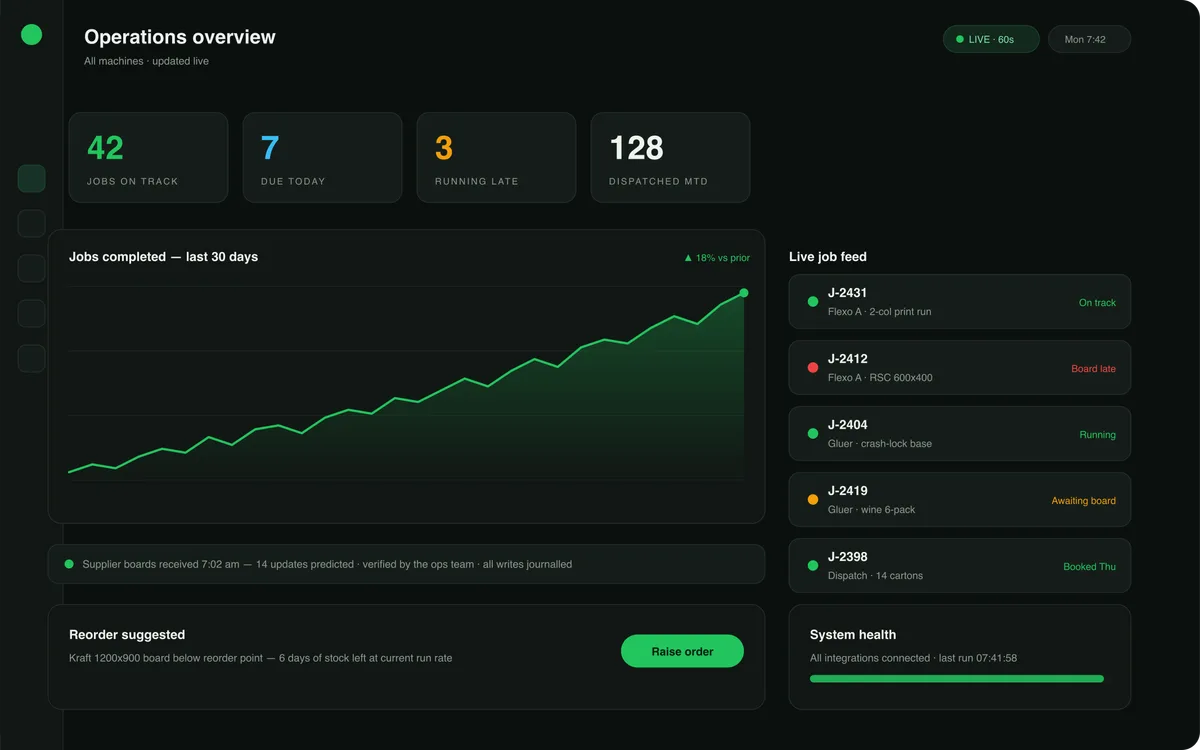
Supplier emails into the ERP, automatically, with a live factory dashboard.
Private system. Figures on screen are illustrative.

Customer portals, booking systems, web apps, automation and dashboards.
Shingle Splitters Point, Balcolyn. Photo: @tachilver on Unsplash
We turn the way your business works into software your customers and team can use, connecting the tools you already rely on.
Customer portals, booking systems, web apps, automation and dashboards.
Your software should support the way you work. When standard tools leave gaps, a focused custom build can give your customers and team a simpler way forward.
Your process is different, but the off-the-shelf tool asks you to work around its limits. We design the forms, permissions and steps around your actual needs.
Customers email requests, staff update spreadsheets and someone enters it all again. A connected portal or automated workflow can bring those steps together.
Bookings, jobs and progress are hard to track across separate systems. Give the right people a clear, current view without chasing updates.
Start with the outcome you need. We scope a useful first version, then build the features and connections that support it.
A secure place to manage requests, documents, approvals and progress, with access shaped around each user.
Appointments, availability and reservations that follow your business rules, with a clear view for customers and staff.
Browser-based tools for job tracking, forms, quoting and team workflows. Explore web app development.
Connect email, spreadsheets and existing business tools to reduce repetitive entry, with checks before automated changes go live.
Bring operations, sales or project information into one useful view, from a team dashboard to a factory-floor display.
Turn a new software idea into a focused first release, test it with users and extend it as you learn.
A real build, running in production today for Phoenix Packaging, a Central Coast box manufacturer.
Supplier emails into the ERP, automatically, with a live factory dashboard.
Private system. Figures on screen are illustrative.
The problem: every morning, two suppliers emailed through their work-in-progress spreadsheets, and an admin re-keyed them into the company ERP, line by line. Same job, every day, before the real work started.
What we built: the system now reads those supplier emails as they arrive, matches each order line to the right job, and emails a predicted update before the manual pass would have started. Staff verify the prediction instead of typing the data. On day one it matched the human 14 out of 14.
We used to start every morning re-keying supplier spreadsheets before anyone could trust the job board. That's gone. The floor has a live board now, and the numbers are right. Everything looks amazing.
Automation that touches your business data has to earn trust. Every build follows the same staged approach, and your data stays in Australia.
The system starts by watching and reporting. It writes nothing until you've seen it understand your data correctly.
Before any write path goes live, it runs in shadow mode, predicting what it would do while a person still does the job, until it has proven itself.
Every automated write is journalled. If anything ever needs unwinding, it can be, cleanly, without guesswork.
It runs in your accounts, on your infrastructure, with your data staying in Australia. One lever switches us off, any time you like.
How it's built: we build these systems using AI-assisted engineering, which is how a small team ships them fast and thoroughly tested. The systems themselves are deterministic: plain, rule-based software that behaves the same way every time.
Common questions about automation builds.
Book a 15-minute call and tell us what you need. We'll help you work out a useful first version. No pressure, no obligation, no jargon.